
- Patients should seek care at once for sudden vision loss in one eye; label changes under review. Separately, travellers may now carry up to three months of prescribed medicine into Korea.
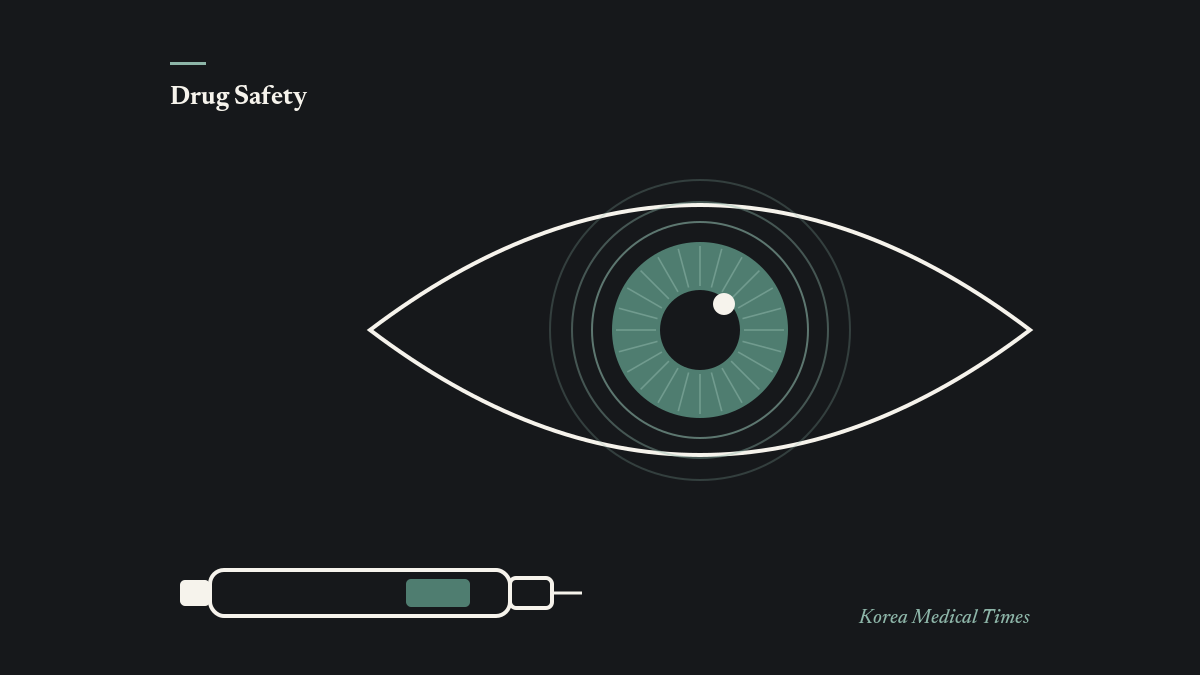
The action follows safety information released by the US Food and Drug Administration (FDA) on November 9. According to the MFDS letter, dated November 10, NAION can cause sudden, painless vision loss in one eye and may lead to permanent loss of vision.
The letter cites the FDA's review of clinical-trial data, observational studies and post-marketing adverse-event reports. Across 126 clinical trials involving more than 134,000 participants, NAION occurred at 6.4 events per 100,000 person-years in GLP-1-treated patients versus 3.8 in controls, suggesting a possible increase in relative risk. The FDA has asked all GLP-1 receptor agonist marketing authorisation holders to add this information to the Warnings and Precautions section of their labels.
The absolute risk, however, is low. In the FDA analysis, the difference between the two groups was about 2.6 events per 100,000 person-years, and the FDA put the incidence of NAION in the general population aged 50 and over at 2.3 to 10.2 cases per 100,000 people per year. A causal relationship has not been established.
In Korea, the MFDS listed 38 affected products from four companies: Novo Nordisk Pharma Korea, Hanmi Pharmaceutical, Lilly Korea and Sanofi. Active ingredients include semaglutide (Wegovy), liraglutide (Saxenda), tirzepatide (Mounjaro), efpeglenatide (Hanmi Pharmaceutical) and dulaglutide (Trulicity). The list covers diabetes treatments as well as obesity medicines.
Patients and caregivers are advised to be aware that the risk of NAION, while rare, may be increased. Symptoms named in the letter include sudden, painless loss of vision in one eye, sometimes noticed on waking; blurred vision or loss of part of the visual field, such as blind spots or tunnel vision; distorted colour vision; and blurred or hazy central vision. Anyone who notices any of these should contact their treating clinician or pharmacist immediately.
Healthcare professionals are advised to tell patients to report such symptoms promptly and to refer suspected NAION cases to an ophthalmologist without delay. In patients who develop NAION, discontinuation of GLP-1 therapy should be considered unless the benefit of treatment clearly outweighs the risk. These medicines should be used only as prescribed and within their approved indications.
The underlying cause of NAION is not fully understood. The letter lists smoking, diabetes, hypertension, obstructive sleep apnoea, anaemia and kidney disease as risk factors, and notes that NAION in one eye increases the risk in the other.
The MFDS has asked companies supplying these products in Korea to submit the safety information and their labelling-change plans, and will review revisions to the precautions for use on that basis.
Prescribed medicines from abroad may now be carried into Korea
From November 12, travellers may bring medicines for personal treatment into Korea in their luggage, the MFDS and the Korea Customs Service announced. The medicine must have been prescribed or purchased through the regular healthcare system of the country concerned and approved by that country's drug regulator. Up to six bottles or packs are allowed, or more if the quantity does not exceed three months' use at the prescribed dose. For example, a once-weekly self-injected GLP-1 obesity medicine may be brought in up to 12 pens, a three-month supply.
The rule covers Korean patients who travel abroad with their medication and return, foreign nationals and international students bringing in medicines they use at home, and travellers who obtain medicines while abroad. Patients who bring in and use GLP-1 products properly prescribed abroad should watch for the same eye symptoms described above.
This article conveys official safety information. It does not replace individual diagnosis or treatment advice. Anyone with symptoms should consult their healthcare provider rather than act on their own judgement.
Sources
· MFDS press note, "MFDS pursues safety measures for GLP-1 drugs," Nov 11, 2026
· Korea.kr policy briefing (MFDS release), Nov 11, 2026
· MFDS and Korea Customs Service, personal carry-in of medicines for self-treatment, Nov 11, 2026
· Korea.kr policy news, Nov 12, 2026
· MFDS drug safety letter (PDF), Nov 10, 2026
· US FDA Drug Safety Communication, Nov 9, 2026
· Korean original: Korea Medical Times, Nov 14, 2026
This article is for information only and is not medical advice.
ⓒ Korea Medical Times & koreamedicaltimes.com 무단전재-재배포금지
BEST 뉴스
-
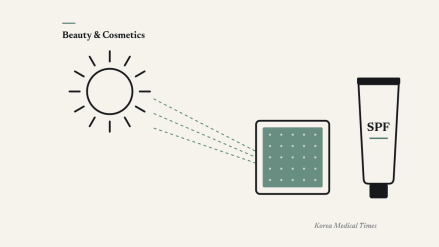
Korea to Accept Non-Human SPF Testing for Sunscreens From November 2027, While Tightening Exemptions and Claim Substantiation
Graphic: Korea Medical Times Korea's Ministry of Food and Drug Safety (MFDS) has amended two regulatory notices so that sun protection factor (SPF) and protection grade of UVA (PA) values measured in vitro, on polymethyl methacrylate (PMMA) plates rather than human skin... -
MFDS Issues Safety Letter on Optic Neuropathy Risk With GLP-1 Drugs for Obesity and Diabetes
Graphic: Korea Medical Times Korea's Ministry of Food and Drug Safety (MFDS) said on November 11 that it had distributed a drug safety letter to healthcare professionals and patients after overseas data suggested that glucagon-like peptide-1 (GLP-1) receptor agonists, u... -

Korea's First Formal Evaluation of 'Pre-Entry' Medical AI: What Is Being Tested, and Why Passing Does Not Guarantee Insurance Coverage
Graphic: Korea Medical Times Korea's National Evidence-based Healthcare Collaborating Agency (NECA) is conducting its first formal evaluation of the safety and effectiveness of medical artificial intelligence (AI) technologies that have been used as non-reimbursed ser... -

Planning Medical Care in Korea: How International Patients Can Check Registration, Visas, Interpreters and Their Rights
Graphic: Korea Medical Times Korea has a dedicated legal framework for international patients. The Act on Support for Overseas Expansion of Medical Services and Attraction of International Patients (current text in force from 12 May 2026) sets out who may arrange care... -
US, Mexico and Bolivia lose measles elimination status; travellers urged to confirm MMR vaccination before departure
Graphic: Korea Medical Times Quotations originally in Korean have been translated by KMT. PAHO quotations are from PAHO's English-language release.The Pan American Health Organization (PAHO) announced on Nov 17 (local time) that endemic measles transmission has been r... -

Korea's Digital Healthcare Act draws criticism over consent-free use of pseudonymised medical data; Health Ministry says bill follows the PIPA framework
Graphic: Korea Medical Times Quotations originally in Korean have been translated by KMT. EHDS wording is quoted from the official English text of Regulation (EU) 2025/327. The so-called Digital Healthcare Act, pending before the National Assembly Health and Welfare ...
전체댓글 0
NEWS TOP 5
-
1
Korea to Accept Non-Human SPF Testing for Sunscreens From November 2027, While Tightening Exemptions and Claim Substantiation
-
2
MFDS Issues Safety Letter on Optic Neuropathy Risk With GLP-1 Drugs for Obesity and Diabetes
-
3
Korea's First Formal Evaluation of 'Pre-Entry' Medical AI: What Is Being Tested, and Why Passing Does Not Guarantee Insurance Coverage
-
4
Planning Medical Care in Korea: How International Patients Can Check Registration, Visas, Interpreters and Their Rights
-
5
US, Mexico and Bolivia lose measles elimination status; travellers urged to confirm MMR vaccination before departure