
- NECA is reviewing the safety and effectiveness of technologies whose assessment deferral has ended, with results expected in December. The US sets billing codes and payment separately; Germany negotiates prices after up to a year of provisional listing.
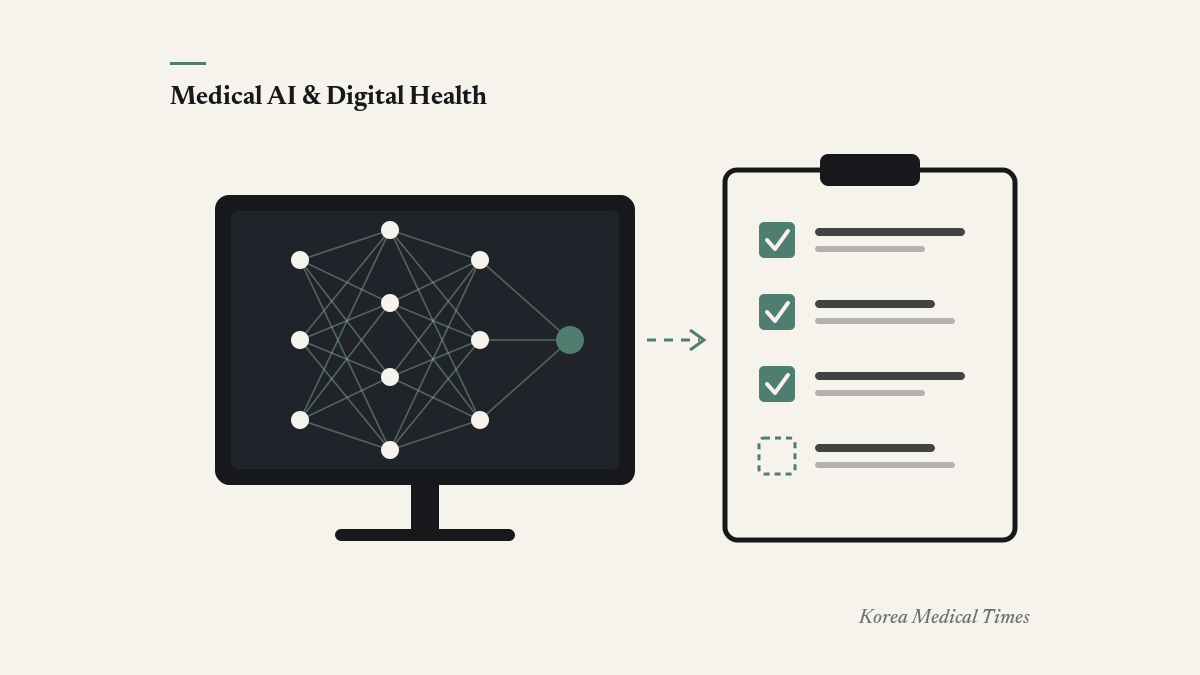
Deferred assessment is a "pre-entry" scheme that allows technologies using medical devices approved by the Ministry of Food and Drug Safety (MFDS) to enter clinical practice before a formal new health technology assessment. The Enforcement Rules on New Health Technology Assessment set the deferral period at up to two years; an amendment in March 2025 allowed a single extension of up to two more years. If an assessment is requested at least 30 days before the deferral ends, the technology may continue to be used until the result is notified. Medical institutions must inform patients of the non-reimbursed cost and obtain written consent.
Under the ministry's Notice on New Health Technologies Subject to Deferred Assessment (amended October 8, 2026), the deferral period for 10 technologies ended on March 5, 2026. Five of these are software technologies that analyse vital signs or electroencephalography (EEG) data, including monitoring of the risk of cardiac arrest within 24 hours in general-ward inpatients, prediction of the risk of acute deterioration or a serious event within six hours, prediction of the risk of sepsis within four hours, and machine-learning-based identification of mild cognitive impairment from EEG. The rest include in vitro diagnostic tests, a knee procedure, brain electrical stimulation for depression and hemoperfusion therapy; the 11 technologies reported to be under review therefore also include non-AI technologies. According to Maeil Labor News, citing data that Rep. Kim Yoon, a member of the National Assembly's Health and Welfare Committee, obtained from the ministry, 23 AI medical devices entered the market through deferred assessment from 2020 through September 2026. All five that had applied for formal assessment after their deferral ended were still under review, and none had passed.
NECA explains that new health technology assessment reviews safety and effectiveness on the basis of a systematic review, which comprehensively searches and analyses existing studies. After review by a subcommittee, the New Health Technology Assessment Committee makes the final decision, and the ministry publishes the result as a notice. The rules require the result to be notified within 250 days of the application, and applicants may file an objection within 30 days of notification. For risk-prediction AI, a key question is whether clinicians' responses and patient outcomes actually change after an alert, separately from predictive accuracy. NECA has not disclosed its specific criteria for this judgement.
Passing the assessment does not mean national health insurance coverage, which is a separate process. NECA states that the safety and effectiveness assessment under the Medical Service Act is distinct from the assessment of benefit appropriateness and cost-effectiveness under national health insurance legislation, and that its New Health Technology Assessment division handles only the former. Under the Rules on the Standards for National Health Insurance Care Benefits, medical institutions and other applicants must apply to the Health Insurance Review and Assessment Service (HIRA) for a coverage decision within 30 days of first performing the technology after the assessment result is published, submitting the basis for calculating relative value scores and cost-effectiveness data, among other documents.
How other countries approach it
United States: Food and Drug Administration (FDA) authorisation and Medicare coverage and payment are decided separately. In its fiscal year 2021 inpatient payment rule, the Centers for Medicare & Medicaid Services (CMS) approved a new technology add-on payment (NTAP) for software that uses AI to analyse CT angiography images and alert clinicians to patients with suspected stroke; the add-on payment is capped at 65% of the cost of the technology. In 2024, CMS created the Transitional Coverage for Emerging Technologies (TCET) pathway to speed coverage decisions for FDA-designated Breakthrough Devices, and expected to accept up to five technologies a year. The calendar year 2027 outpatient payment final rule, published in the Federal Register on November 6, 2026, defines software that supports diagnosis and clinical decision-making as Software as a Medical Service (SaMS) and assigns it to New Technology Ambulatory Payment Classifications (APCs) for separate payment until a long-term payment method is established. The American Medical Association (AMA) said that CPT 2027, which takes effect in January 2027, adds 10 AI-related codes, bringing the total to 43. The AMA, however, describes Category III codes for emerging technologies as temporary codes intended to collect data on clinical utility.
Germany: For digital health applications (DiGA), the Federal Institute for Drugs and Medical Devices (BfArM) decides on listing within three months of receiving a complete application. If evidence of benefit is insufficient, a DiGA may be provisionally listed for up to 12 months, with a possible extension of another 12 months. Under Section 134 of Book V of the Social Code (SGB V), the price set by the manufacturer, within a cap, applies in the first year of listing; thereafter, the price negotiated with the National Association of Statutory Health Insurance Funds (GKV-Spitzenverband) applies. From January 2026, all DiGA price agreements, including existing ones, must tie at least 20% of the negotiated price to performance. According to a report by the association, 74 DiGA had been listed by the end of 2025, of which 16 had been removed, leaving 58.
What patients should know
A technology under deferred assessment is used before its safety and effectiveness have been formally assessed. Patients should receive an explanation and give written consent before use, and be told the non-reimbursed cost in advance.
Formal assessment results are published as Ministry of Health and Welfare notices. Even if a technology is recognised as a new health technology, whether it is covered by national health insurance, and at what price, is decided separately through the HIRA process.
This article is based on Ministry of Health and Welfare notices and legislation, public documents from NECA, US CMS and the AMA, German federal legislation and the GKV-Spitzenverband, and media reports.
Sources
· Ministry of Health and Welfare, Notice on New Health Technologies Subject to Deferred Assessment (No. 2026-210, amended Oct 8, 2026), full text (Korean) link
· Korean Law Information Center, Enforcement Rules on New Health Technology Assessment (deferral-extension provision added Mar 6, 2025) (Korean) link
· Korean Law Information Center, Rules on the Standards for National Health Insurance Care Benefits, Article 10 (application for coverage decisions on procedures and treatment materials) (Korean) link
· NECA, guide to new health technology assessment (scope, procedure and deferred assessment) (Korean) link
· Ministry of Health and Welfare press release on strengthening the safety of pre-entry health technologies and patient choice (pre-announcement of rule amendment), Oct 28, 2024 (Korean) link
· Ministry of Health and Welfare, partial amendment to the Guidelines on the Management of New Health Technologies Subject to Deferred Assessment, Mar 31, 2025 (Korean) link
· Money Today Broadcasting (MTN), "First formal evaluation of medical AI: results next month, proving effectiveness is key," Nov 12, 2026 (Korean) link
· Health Chosun, "First evaluation of non-reimbursed medical AI technologies: a turning point for companies' follow-on business," Oct 23, 2026 (Korean) link
· Money Today, "The 'fate' of medical AI to be decided next month," Oct 16, 2026 (Korean) link
· Maeil Labor News, "Medical AI unlocked (2): easy market entry, gaps in post-market management" (data from the office of Rep. Kim Yoon), Oct 14, 2026 (Korean) link
· US Federal Register, FY 2021 IPPS/LTCH PPS Final Rule (NTAP approvals), Sep 18, 2020 link
· CMS, Final Notice: Transitional Coverage for Emerging Technologies (CMS-3421-FN), Aug 7, 2024 link
· US Federal Register, CY 2027 OPPS/ASC Final Rule (Software as a Medical Service), Nov 6, 2026 link
· AMA, "AMA releases CPT 2027 code set," Sep 9, 2026 link
· AMA, "CPT codes offer the language to report AI-enabled health services" link
· BfArM, guide to the DiGA Fast-Track procedure under Section 139e SGB V (German) link
· Gesetze im Internet, Section 134 SGB V (DiGA reimbursement amounts) (German) link
· GKV-Spitzenverband, Focus: Digital Health Applications (DiGA) (German) link
· GKV-Spitzenverband, press release "DiGA wachsen – Qualität und Preise müssen Schritt halten" (DiGA report, Sep 1, 2020 to Dec 31, 2025), Apr 8, 2026 (German) link
· Korean original: Korea Medical Times, Nov 16, 2026 link
This article is for information only and is not medical advice.
- medical AI
- deferred assessment
- new health technology assessment
- NECA
- HIRA
- national health insurance
- DiGA
- NTAP
- CPT
ⓒ Korea Medical Times & koreamedicaltimes.com 무단전재-재배포금지
BEST 뉴스
-
Korea to Accept Non-Human SPF Testing for Sunscreens From November 2027, While Tightening Exemptions and Claim Substantiation
Graphic: Korea Medical Times Korea's Ministry of Food and Drug Safety (MFDS) has amended two regulatory notices so that sun protection factor (SPF) and protection grade of UVA (PA) values measured in vitro, on polymethyl methacrylate (PMMA) plates rather than human skin... -
MFDS Issues Safety Letter on Optic Neuropathy Risk With GLP-1 Drugs for Obesity and Diabetes
Graphic: Korea Medical Times Korea's Ministry of Food and Drug Safety (MFDS) said on November 11 that it had distributed a drug safety letter to healthcare professionals and patients after overseas data suggested that glucagon-like peptide-1 (GLP-1) receptor agonists, u... -
Korea's First Formal Evaluation of 'Pre-Entry' Medical AI: What Is Being Tested, and Why Passing Does Not Guarantee Insurance Coverage
Graphic: Korea Medical Times Korea's National Evidence-based Healthcare Collaborating Agency (NECA) is conducting its first formal evaluation of the safety and effectiveness of medical artificial intelligence (AI) technologies that have been used as non-reimbursed ser... -

Planning Medical Care in Korea: How International Patients Can Check Registration, Visas, Interpreters and Their Rights
Graphic: Korea Medical Times Korea has a dedicated legal framework for international patients. The Act on Support for Overseas Expansion of Medical Services and Attraction of International Patients (current text in force from 12 May 2026) sets out who may arrange care... -
US, Mexico and Bolivia lose measles elimination status; travellers urged to confirm MMR vaccination before departure
Graphic: Korea Medical Times Quotations originally in Korean have been translated by KMT. PAHO quotations are from PAHO's English-language release.The Pan American Health Organization (PAHO) announced on Nov 17 (local time) that endemic measles transmission has been r... -

Korea's Digital Healthcare Act draws criticism over consent-free use of pseudonymised medical data; Health Ministry says bill follows the PIPA framework
Graphic: Korea Medical Times Quotations originally in Korean have been translated by KMT. EHDS wording is quoted from the official English text of Regulation (EU) 2025/327. The so-called Digital Healthcare Act, pending before the National Assembly Health and Welfare ...
전체댓글 0
NEWS TOP 5
-
1
Korea to Accept Non-Human SPF Testing for Sunscreens From November 2027, While Tightening Exemptions and Claim Substantiation
-
2
MFDS Issues Safety Letter on Optic Neuropathy Risk With GLP-1 Drugs for Obesity and Diabetes
-
3
Korea's First Formal Evaluation of 'Pre-Entry' Medical AI: What Is Being Tested, and Why Passing Does Not Guarantee Insurance Coverage
-
4
Planning Medical Care in Korea: How International Patients Can Check Registration, Visas, Interpreters and Their Rights
-
5
US, Mexico and Bolivia lose measles elimination status; travellers urged to confirm MMR vaccination before departure