
- PAHO says endemic transmission has been re-established in three countries; Korea retains WHO elimination status for a 13th consecutive year and advises two documented doses before travel
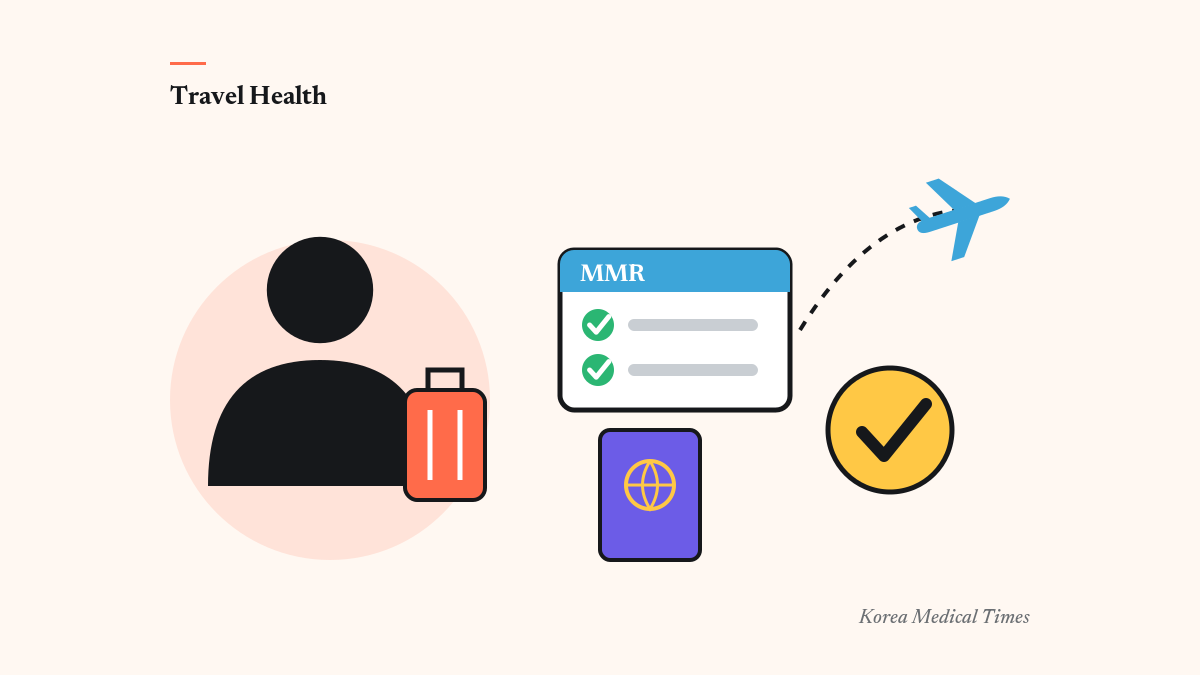
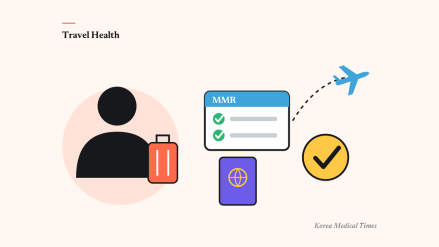
The Pan American Health Organization (PAHO) announced on Nov 17 (local time) that endemic measles transmission has been re-established in the United States, Mexico and Bolivia, and that the three countries have lost their measles elimination status. On the same day, the Korea Disease Control and Prevention Agency (KDCA) said that Korea had been verified by the World Health Organization (WHO) as having eliminated measles for the 13th consecutive year since 2014, and urged travellers to check for outbreaks in their destination countries and to confirm their measles, mumps and rubella (MMR) vaccination history before going abroad.
Status is lost after 12 months of continuous circulation of the same lineage
According to PAHO, the Measles, Rubella and Congenital Rubella Syndrome Elimination Regional Monitoring and Re-Verification Commission (RVC) reviewed the epidemiological situation in the Americas at a meeting held Nov 10–13. After PAHO Director Jarbas Barbosa accepted the commission's assessment and recommendations, endemic measles transmission was determined to have been re-established in Bolivia, Mexico and the United States. Under the commission's criteria, endemic transmission is considered re-established when measles virus of the same genotype and lineage circulates in a country without interruption for 12 months or more.
A technical reference for journalists published by PAHO the same day set out the periods of sustained transmission. In the United States, the outbreak began on Jan 20, 2025, and reached the 12-month threshold on Jan 20, 2026; in Mexico, it began on Feb 1, 2025, and reached the threshold on Feb 1, 2026; and in Bolivia, it began on April 16, 2025, and reached the threshold on April 16, 2026. The document explains that losing elimination status does not mean an outbreak is occurring throughout the country, but that the virus has spread within the country without interruption for at least 12 months.
"Losing measles elimination status is much more than losing a public health designation. It means the virus has circulated for a prolonged period, putting families and communities at risk of preventable illness, hospitalization and death," said Dr Barbosa.
According to PAHO, 58,213 confirmed measles cases and 82 deaths had been reported in the Americas as of Nov 13, up from 12,806 confirmed cases in the same period of the previous year. The Americas was the first region in the world to eliminate measles, gaining regional elimination status in 2016 and regaining it in 2024 after endemic transmission in Venezuela and Brazil was interrupted. The region lost that status again in November 2025, when sustained transmission was confirmed in Canada; PAHO announced the decision on Nov 10, 2025.
Canada lost its national elimination status in 2025 because of an outbreak that began in October 2024. In its Nov 17 release, PAHO said Canada had interrupted the chains of transmission linked to the outbreak that led to the loss of status and is working to regain it. The Public Health Agency of Canada (PHAC) declared the multi-jurisdictional outbreak over on Oct 19, while noting that this does not automatically restore elimination status. Canada must demonstrate that transmission of the lineage concerned has been interrupted for 12 consecutive months and submit the data required for re-verification.
Korea verified for a 13th year; all 86 cases in 2025 to mid-2026 imported or import-related
In its Nov 17 press release, the KDCA said Korea had been verified by the WHO as a measles-elimination country for the 13th consecutive year. The WHO Regional Office for the Western Pacific (WPRO) convened its Regional Verification Commission for Measles Elimination in Jakarta, Indonesia, on Sept 7–11 to assess member states, and in October recognised that Korea had maintained its elimination status. Measles elimination means that, even when cases are imported from abroad, the virus does not become established and spread continuously within the country.
During the assessment period, from 2025 through the first half of 2026, 86 measles cases were reported in Korea. Of these, 61 were imported cases infected abroad and 25 were import-related cases transmitted from imported cases. The KDCA said there were no cases of endemic origin during this period.
A graph of annual and monthly cases attached to the same press release runs to epidemiological week 46 of 2026, but the text of the release does not give a cumulative total for 2026 or a breakdown by country of infection. Issue 39 of 2026 of the KDCA's "Global Infectious Disease Trends," published on Oct 16, put the number of measles cases in Korea at 10 as of Oct 15, 2026 (provisional figures), all of them imported or import-related.
The KDCA said the WHO recognised Korea's high vaccination coverage and its case surveillance and response system. Korea's MMR coverage in 2025 was 96.9% for the first dose and 96.7% for the second; coverage for both doses also exceeded 95% in 2023 and 2024.
Outbreaks abroad, however, are growing. Citing WHO data, the KDCA said that, on the basis of WHO provisional counts of confirmed cases, about 340,000 measles cases were reported worldwide in January–October 2026. In South-East Asia, cases rose 5.1-fold, from 19,851 in the whole of 2025 to 100,405 in January–October this year; in the Americas, they rose 3.8-fold, from 14,707 in the whole of 2025 to 56,190 in January–October this year. This figure for the Americas (January–October, WHO provisional confirmed cases) comes from a different source and reference date from the PAHO figure of 58,213 confirmed cases as of Nov 13 cited above. The KDCA noted that both South-East Asia and the Americas are frequent destinations for Korean travellers and called for caution. The government has designated 107 countries as measles quarantine-management areas; travellers who develop suspected symptoms after visiting these areas must report their health status on arrival through the Q-CODE pre-entry quarantine information system or a health declaration form. Information on outbreaks in destination countries is available on the KDCA's travel health website (travelhealth.kdca.go.kr).
"Korea has been able to maintain its elimination status, even as measles has been spreading in many countries, thanks to the public's active participation in vaccination and the dedicated efforts of healthcare workers and public health officials," said KDCA Commissioner Lim Seung-kwan. "The KDCA will continue to do its utmost, together with the public, to sustain immunity through vaccination and to strengthen surveillance and response to imported cases so that Korea can keep its measles elimination status."
Confirm two doses before departure; adults without evidence of immunity should complete vaccination 4–6 weeks ahead
Measles is a highly contagious respiratory infection that can spread through the air. The incubation period is 7–21 days (mean, 10–12 days), and typical symptoms are fever, rash, cough, coryza and conjunctivitis. According to the KDCA, more than 90% of non-immune people who come into contact with a patient may become infected. Infants under 12 months of age are at high risk of complications such as pneumonia, otitis media and encephalitis.
Measles is vaccine-preventable. Under Korea's National Immunization Program, children receive one dose of MMR vaccine at 12–15 months and another at 4–6 years, for two doses in total. According to the questions and answers (Q&A) in the KDCA press release, infection can occur very rarely even after both recommended doses, but symptoms tend to be relatively mild; vaccine effectiveness is 95% after one dose and 97% after two. People who completed two doses in early childhood do not need an additional dose.
Adults without evidence of immunity need at least one dose, and two doses at least 4 weeks apart are recommended for healthcare workers and people planning to travel abroad. The annex to the press release states that "people born on or after January 1, 1968, without evidence of immunity should receive at least one dose" and that "people born on or before December 31, 1967, do not need vaccination (except healthcare workers)." Laboratory-confirmed measles, confirmed measles antibodies and documentation of two MMR doses are listed as evidence of immunity.
Recommendations are more specific for travel to areas with outbreaks. Adolescents and adults without evidence of immunity are advised to complete two doses of MMR vaccine (at least 4 weeks apart) 4–6 weeks before departure. Infants aged 6–11 months should avoid travel to countries with measles outbreaks as far as possible; if travel is unavoidable, they may receive one accelerated dose at least 2 weeks before departure. Because an accelerated dose does not replace the routine first dose, these infants should still receive the standard doses at 12–15 months and 4–6 years. The KDCA said that protective immunity usually takes about 2 weeks to develop, so vaccination should be completed before departure. According to the Q&A table in the press release, children aged 12 months to 12 years with no or unknown vaccination history should receive one dose at least 2 weeks before departure and then the standard dose at 4–6 years. Those who have already received one dose should receive one more at least 2 weeks before departure, at least 4 weeks after the previous dose. Children who have completed two doses do not need vaccination.
Vaccination records and nearby designated vaccination clinics can be checked on the KDCA's immunization helper website (nip.kdca.go.kr). Enquiries are handled by the KDCA call centre (1339, within Korea).
Anyone who develops suspected symptoms such as fever or rash within 3 weeks of arrival should minimise contact with others, wear a mask, and seek care, informing the healthcare provider of their travel history. The KDCA added that if a household includes high-risk members, such as infants who have not yet received their first dose or pregnant women, it is important to limit contact with family members as well and to seek care immediately.
This article is based on PAHO's Nov 17 announcement and technical reference for journalists, the KDCA press release and "Global Infectious Disease Trends," and the Public Health Agency of Canada's announcement.
This article was first published in Korean on Nov 21, 2026: koreamedicaltimes.com/news/view.php?no=355
Sources
· PAHO, "PAHO urges countries to step up efforts to stop measles outbreaks and move towards elimination in the Americas," Nov 17, 2026 Link
· PAHO, "Measles in the Americas: Questions and Answers – Technical Reference for Journalists and the Public," Nov 17, 2026 Link
· Korea Disease Control and Prevention Agency, press release, "Korea verified by the WHO as a measles-elimination country for 13 consecutive years" (「한국, 세계보건기구로부터 13년 연속 홍역 퇴치 인증」), Nov 17, 2026 Link
· Same press release (republished on Korea.kr) Link
· Same press release, original PDF Link
· Korea Disease Control and Prevention Agency, "Global Infectious Disease Trends" (「전 세계 감염병 발생 동향」), 2026 Issue 39, Oct 16, 2026, posting page Link; original file Link
· Public Health Agency of Canada, "Multi-jurisdictional Measles Outbreak is Over," Oct 19, 2026 Link
· KDCA travel health website (여행건강알림e) Link
· KDCA immunization helper (예방접종도우미) Link
· KDCA immunization helper, measles vaccination guidelines Link
- measles
- MMR
- vaccination
- imported cases
- PAHO
- United States
- Mexico
- Bolivia
- Canada
- KDCA
- measles elimination
- travel health
- accelerated dose
ⓒ Korea Medical Times & koreamedicaltimes.com 무단전재-재배포금지
BEST 뉴스
-

Korea to Accept Non-Human SPF Testing for Sunscreens From November 2027, While Tightening Exemptions and Claim Substantiation
Graphic: Korea Medical Times Korea's Ministry of Food and Drug Safety (MFDS) has amended two regulatory notices so that sun protection factor (SPF) and protection grade of UVA (PA) values measured in vitro, on polymethyl methacrylate (PMMA) plates rather than human skin... -
MFDS Issues Safety Letter on Optic Neuropathy Risk With GLP-1 Drugs for Obesity and Diabetes
Graphic: Korea Medical Times Korea's Ministry of Food and Drug Safety (MFDS) said on November 11 that it had distributed a drug safety letter to healthcare professionals and patients after overseas data suggested that glucagon-like peptide-1 (GLP-1) receptor agonists, u... -

Korea's First Formal Evaluation of 'Pre-Entry' Medical AI: What Is Being Tested, and Why Passing Does Not Guarantee Insurance Coverage
Graphic: Korea Medical Times Korea's National Evidence-based Healthcare Collaborating Agency (NECA) is conducting its first formal evaluation of the safety and effectiveness of medical artificial intelligence (AI) technologies that have been used as non-reimbursed ser... -

Planning Medical Care in Korea: How International Patients Can Check Registration, Visas, Interpreters and Their Rights
Graphic: Korea Medical Times Korea has a dedicated legal framework for international patients. The Act on Support for Overseas Expansion of Medical Services and Attraction of International Patients (current text in force from 12 May 2026) sets out who may arrange care... -
US, Mexico and Bolivia lose measles elimination status; travellers urged to confirm MMR vaccination before departure
Graphic: Korea Medical Times Quotations originally in Korean have been translated by KMT. PAHO quotations are from PAHO's English-language release.The Pan American Health Organization (PAHO) announced on Nov 17 (local time) that endemic measles transmission has been r... -

Korea's Digital Healthcare Act draws criticism over consent-free use of pseudonymised medical data; Health Ministry says bill follows the PIPA framework
Graphic: Korea Medical Times Quotations originally in Korean have been translated by KMT. EHDS wording is quoted from the official English text of Regulation (EU) 2025/327. The so-called Digital Healthcare Act, pending before the National Assembly Health and Welfare ...
전체댓글 0
NEWS TOP 5
-
1
Korea to Accept Non-Human SPF Testing for Sunscreens From November 2027, While Tightening Exemptions and Claim Substantiation
-
2
MFDS Issues Safety Letter on Optic Neuropathy Risk With GLP-1 Drugs for Obesity and Diabetes
-
3
Korea's First Formal Evaluation of 'Pre-Entry' Medical AI: What Is Being Tested, and Why Passing Does Not Guarantee Insurance Coverage
-
4
Planning Medical Care in Korea: How International Patients Can Check Registration, Visas, Interpreters and Their Rights
-
5
US, Mexico and Bolivia lose measles elimination status; travellers urged to confirm MMR vaccination before departure