
- Government alternative would let institutional committees waive consent even for psychiatric and genetic data; the EU writes in a right to opt out "at any time"
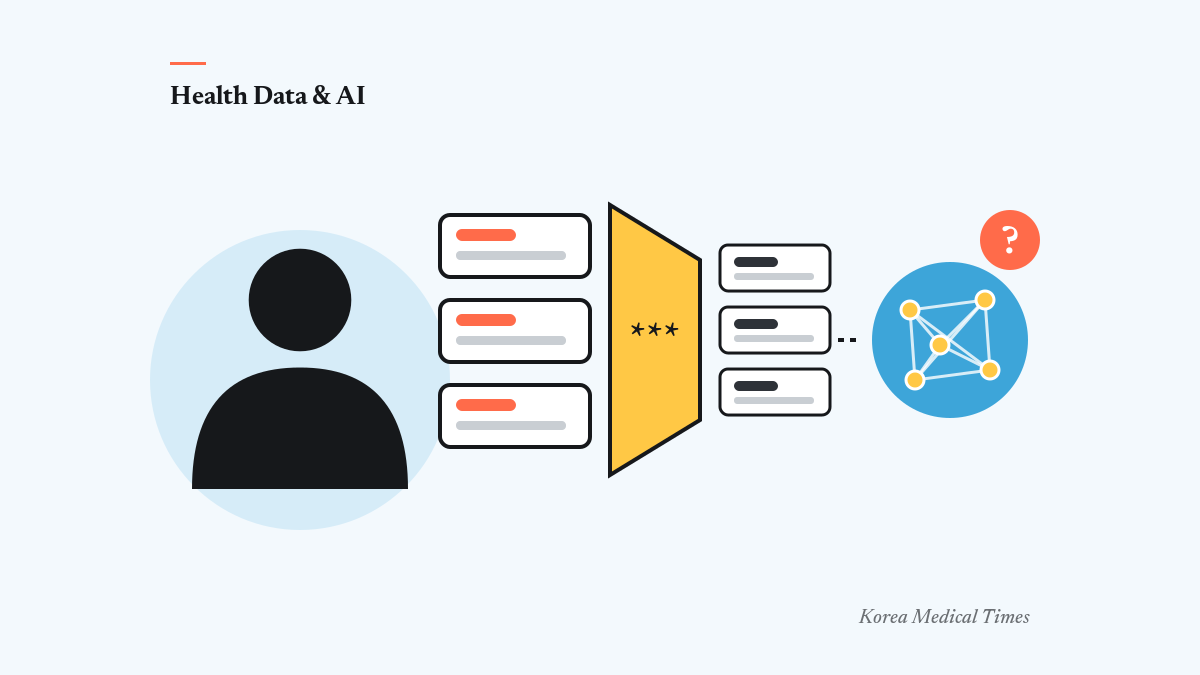
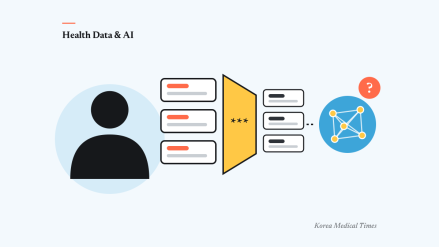
The so-called Digital Healthcare Act, pending before the National Assembly Health and Welfare Committee, has come under criticism for allowing pseudonymised medical data to be used for artificial intelligence (AI) development and research without patients' consent. In a Nov 16 article, "My medical data used for AI research without consent? Controversy over the Digital Healthcare Act", the Kyunghyang Shinmun reported criticism that the bill lowers the threshold for using such data without putting adequate privacy safeguards in place. The Ministry of Health and Welfare (MOHW) issued an explanatory press note the same day, rebutting the report and describing the legislation as "a bill to support use [of medical data] together with secure safeguards, taking into account the special nature of medical information."
Under discussion are four enactment bills pending in the Assembly and a government alternative that consolidates them. The four are bills sponsored by Rep. Ahn Sang-hoon (bill No. 2205134, introduced Oct 31, 2024), Rep. Seo Young-seok (2214515, Nov 24, 2025), Rep. Kwon Chil-seung (2219646, June 30, 2026) and Rep. Jeon Jin-sook (2220797, Aug 26, 2026). According to the Assembly minutes, the committee's Bill Review Subcommittee No. 1 took up the four bills on Sept 16 and was briefed on a government alternative prepared by the MOHW, but decided to keep them under review "for more in-depth examination." The ministry proposed the title "Act on Digital Healthcare and Support for the Use of Health and Medical Information." Because the government alternative was distributed as subcommittee review material, its text had not been made public as of Nov 19; only the texts of the four lawmakers' bills are available on the National Assembly Bill Information System. Media Today and other outlets reported that the government alternative was submitted to the committee on Sept 15 and would likely be discussed again at a subcommittee meeting on Nov 24. Korea Data Economy News also reported on Nov 19 that the alternative was expected to return to the subcommittee around Nov 24. As of Nov 19, no subcommittee schedule published by the Assembly could be confirmed.
What the government alternative contains
According to the Second Vice Minister of Health and Welfare's explanation recorded in the minutes of the Sept 16 subcommittee meeting, Article 15 of the government alternative (pseudonymisation of personal health and medical information, etc.) adopts the corresponding provision of Rep. Kwon's bill as is. Article 16(1) of the Kwon bill provides that a processor of personal health and medical information may process such information in accordance with Article 28-2 of the Personal Information Protection Act (PIPA). The main text of paragraph 2 requires the data subject's consent to process "personal health and medical information prescribed by Presidential Decree, such as on psychiatric disorders and genetic disorders." A proviso, however, removes the consent requirement if the institutional health and medical information review committee (institutional committee) approves a plan setting out the purpose of processing and privacy-protection measures. Article 16 of the government alternative likewise lists approval of plans under this proviso among the matters for institutional committee review.
The government alternative also includes the following:
A new provision (Article 15(4)) requiring that, when pseudonymised information is provided to a third party, the purpose of processing, data items, recipient and processing period be disclosed on a website or similar. The MOHW said this reflects views from the medical community and civil society.
The Kwon bill would have allowed pseudonymised-data research to be exempted from written consent and institutional review board (IRB) review under the Bioethics and Safety Act; the government alternative deletes this.
A "secondary-use support agency" reviews applicants' eligibility, fitness of purpose, risk of rights infringement and adequacy of safeguards, and decides on approval and conditions of provision (Article 13).
According to the Kyunghyang Shinmun, the Minister of Health and Welfare may request data from the National Health Insurance Service, the Health Insurance Review and Assessment Service, medical data-centred hospitals and participating medical institutions, which must comply unless there are special reasons not to.
The government alternative contains no provision allowing data subjects to refuse use of their information or to demand that processing stop. Rep. Jeon Jong-deok of the Progressive Party told the Sept 16 subcommittee meeting: "Throughout the entire law, there is not a single basis on which a data subject can demand an opt-out." Article 28-2(1) of the current PIPA provides that pseudonymised information may be processed "without the consent of data subjects for purposes such as statistics, scientific research and archiving in the public interest." Article 28-7 of the same Act excludes pseudonymised information processed in this way from the right to demand suspension of processing (Article 37), among other provisions. In Supreme Court ruling 2024Da210554 of July 18, 2025, in a case brought by mobile telecom subscribers seeking to stop pseudonymisation of their data, the court held that pseudonymisation does not constitute "processing" of personal information subject to a demand for suspension.
MOHW: "Safeguards stronger than current law"
In its Nov 16 note, the MOHW said the bill adds safeguards reflecting the special nature of medical information to the existing PIPA exception that allows pseudonymised data to be processed without consent. It cited the following:
An institutional health and medical information review committee (data review board, DRB) including representatives of data subjects, privacy experts and external members will review the appropriateness and safety of pseudonymisation. The ministry described this as a safeguard not found in current law.
Information on diseases with a high re-identification risk, such as rare diseases, will require consent despite the pseudonymisation exception. Genetic information is already used only within the scope of research participants' consent under the Bioethics and Safety Act.
In response to criticism that there is no right to refuse, the ministry said that "under a recent Supreme Court precedent, data subjects' right to demand suspension of pseudonymisation is not recognised." According to the ministry, the bill follows the existing PIPA framework.
A policy review committee including patient and civic groups, the medical community, and privacy and ethics experts will deliberate and decide on the purposes and scope of medical data collection.
Other major countries also include private-sector research and development among secondary uses, while institutionalising safeguards such as independent review and secure analysis environments.
The scope of information requiring consent is worded differently across documents. The ministry's note refers to "rare diseases, etc.", whereas the Kwon bill text adopted by the government alternative refers to information "prescribed by Presidential Decree, such as on psychiatric disorders and genetic disorders." The proviso allowing consent to be waived on institutional committee approval does not appear in the ministry's note.
Criticism: "Secondary use without a right to refuse"
The Kyunghyang Shinmun pointed out that genetic and rare-disease information carries a risk of re-identification when combined with other data, yet the bill does not specify any right to refuse provision of data. Lee Sang-yoon, senior research fellow at the research community Health and Alternative, told the paper: "At present, there is no consent procedure in place to guarantee individual autonomy." According to Media Today, Kim Seong-ju, head of the Korea Severe Disease Association, said at a National Assembly forum on Nov 2: "Our patients' medical information cannot become an industrial resource for companies." Lee also argued at the same forum that "genetic information should be excluded from the scope of the law."
Calls for revision also came from within the Assembly. According to the Sept 16 minutes, Rep. Kim Yoon of the Democratic Party of Korea asked whether there were sufficient mechanisms to ensure that institutional committee members are free of conflicts of interest, subject to recusal and independent. Rep. Han Ji-a of the People Power Party raised the possibility of misuse if data flowed to insurance companies. Rep. Jeon said that although Article 4 of the government alternative bars the use of data for disadvantages in insurance or employment or for marketing, the provisions on corrective orders, penalties and administrative fines set no sanctions for violating it.
The medical community is divided. According to the expert adviser's report to the Sept 16 subcommittee, the Korean Medical Association (KMA) opposed the enactment bills, the Korean Hospital Association (KHA) supported them with amendments, and the Korean Pharmaceutical Association called for careful review. According to Gyeonggi Medi News, the KMA opposes the bills outright as "preoccupied solely with industrial promotion and commercial use." The KHA said the bills impose data-provision obligations on medical institutions while leaving compensation to discretion, and called for provisions on a right to refuse and on liability exemption. The Movement for Stopping Healthcare Privatisation and Realising Free Healthcare and the Joint Action Against Opening Health Insurance Big Data to the Private Sector issued a statement on Nov 17, arguing that under Article 58(6) of the National Assembly Act a public hearing must be held on enactment bills and calling for one.
"Most of development time spent securing data": the case for the bill
Supporters argue that restricted data access is slowing medical AI development. According to Yakup Shinmun, Hyun Ji-hoon, head of research at Deepnoid, said at a National Assembly seminar hosted by Rep. Kwon's office on June 30: "If you spend a year developing AI, about ten months go into securing data." He cited IRB and DRB procedures that differ from hospital to hospital and duplicate reviews in multicentre studies. An MOHW official quoted by the Kyunghyang Shinmun likewise said that because review standards and procedures currently differ by institution, data collection alone often takes more than a year.
According to Gyeonggi Medi News, Seo Joon-beom, a professor at Asan Medical Center, said at a National Academy of Medicine of Korea forum on Sept 17: "For Korea's medical AI transformation, the Digital Healthcare Act must pass this year." Minister of Health and Welfare Jeong Eun-kyeong said in a video address to the same forum that the bill "contains institutional safeguards that enable use of necessary medical information while holding misuse strictly accountable." However, according to Korea Data Economy News, Kim Min-jung, director of the MOHW's Medical Information Policy Division, said at a forum on Nov 2 to the effect that an opt-out needs to be considered as a way to strengthen the right to self-determination.
How the EU does it
The European Union's European Health Data Space (EHDS) Regulation (Regulation (EU) 2025/327) was published in the Official Journal of the EU on March 5, 2025. It, too, sets a broad scope for secondary use of health data.
Purposes: public health, policymaking, statistics, education, scientific research and improvement of care delivery, among others. Scientific research includes development and innovation activities for products or services, and "training, testing and evaluation of algorithms," including in AI systems (Article 53).
Data categories: electronic health records, administrative data including reimbursement claims, data automatically generated through medical devices, data from wellness applications and data from biobanks, as well as human genetic and genomic data (Article 51(1)). Member States may introduce stricter measures and additional safeguards for genetic, genomic and other omic data, wellness-application data and biobank data (Article 51(4)).
Prohibited uses: data may not be used for decisions detrimental to individuals, discrimination in job offers or insurance or credit terms, or advertising and marketing, among others (Article 54).
The biggest difference from the government alternative is the right to refuse. Article 71(1) of the EHDS gives natural persons "the right to opt out at any time, and without providing any reason," from the secondary use of their personal electronic health data, and states that "the exercise of that right shall be reversible." Member States must provide "an accessible and easily understandable opt-out mechanism" (Article 71(2)). Once a person has opted out, their data may not be made available under data permits approved afterwards, but permits already issued are not affected (Article 71(3)). There are exceptions: Member States may provide in national law for a mechanism to make opted-out data available, but only where the application comes from a public sector body or other entity with a public health mandate, for public health, policymaking or statistical purposes or for scientific research for important reasons of public interest, and the data cannot be obtained by alternative means in a timely and effective manner (Article 71(4)).
The review structure also differs. Member States must designate health data access bodies, which are public sector bodies, and their staff "shall act in the public interest and in an independent manner" (Article 55). A health data access body must issue or refuse a data permit within three months of receiving a complete health data access application, extendable by three additional months where necessary. A permit may last up to 10 years and may be extended once (Article 68). Data are to be provided in anonymised format as a rule; pseudonymised data are provided only where the user has sufficiently demonstrated that the purpose cannot be achieved with anonymised data (Article 66). Access pursuant to a data permit is provided only through a secure processing environment (Article 73). Health data access bodies must publish who has been granted access to which datasets and for what purposes, as well as the results of the projects (Article 58). The regulation applies from March 26, 2027, but Chapter IV on secondary use applies from March 26, 2029, and the obligation to make certain categories available, including genetic and genomic data, applies from March 26, 2031 (Article 105).
According to the Kyunghyang Shinmun, England's National Health Service (NHS) also operates a "national data opt-out" that lets patients refuse the use of their health information for research and policymaking.
What this means
The Digital Healthcare Act is still at the standing committee's subcommittee stage. The government alternative has not been approved, and its provisions may change during review.
Under current law, pseudonymised medical data can already be used without consent for statistics, scientific research and similar purposes, and following the Supreme Court ruling it is difficult to demand that pseudonymisation itself be stopped. The issue in this bill is under what conditions that framework should apply to medical data, and whether a data subject's right to refuse should be written into law.
The exact scope of "sensitive information" requiring consent will be set by Presidential Decree after the law passes. Whether institutional committees can waive that consent, and how those committees are constituted, are likely to determine the actual level of protection.
This article is based on National Assembly minutes and bill texts, the MOHW explanatory note, statutes and case law from the Korea Law Information Center, the original text of the EHDS Regulation published in the Official Journal of the EU, and media reports.
This article was first published in Korean on Nov 20, 2026: koreamedicaltimes.com/news/view.php?no=353
Sources
· Ministry of Health and Welfare, explanatory press note, "Regarding the Nov 16 (Mon) Kyunghyang Shinmun report 'My medical data used for AI research without consent: controversy over the Digital Healthcare Act'" (「[11.16.월 경향신문] 내 의료정보 동의 없이 AI 연구에 활용 디지털헬스케어법 논란 관련」), Nov 16, 2026 Link
· Kyunghyang Shinmun, "My medical data used for AI research without consent? Controversy over the Digital Healthcare Act" (「내 의료정보, 동의 없이 AI 연구에 활용?···디지털헬스케어법 논란」), Nov 16, 2026 Link
· National Assembly Secretariat, Minutes of the Health and Welfare Committee (Bill Review Subcommittee No. 1), 439th Session (regular), No. 1, Sept 16, 2026 (제439회국회(정기회) 보건복지위원회회의록(법안심사제1소위원회) 제1호) Link
· National Assembly Bill Information System, Bill on the Promotion of Digital Healthcare and Facilitation of the Use of Health and Medical Information (「디지털 헬스케어 진흥 및 보건의료정보 활용 촉진에 관한 법률안」), Rep. Ahn Sang-hoon and 9 others, bill No. 2205134 Link
· National Assembly Bill Information System, Bill on Digital Healthcare and Support for the Use of Health and Medical Information (「디지털 헬스케어 및 보건의료정보 활용 지원에 관한 법률안」), Rep. Seo Young-seok and 9 others, bill No. 2214515 Link
· National Assembly Bill Information System, Bill on the Promotion of Digital Healthcare and Support for the Use of Health and Medical Information (「디지털 헬스케어 진흥 및 보건의료정보 활용 지원에 관한 법률안」), Rep. Kwon Chil-seung and 9 others, bill No. 2219646 Link
· National Assembly Bill Information System, Bill on the Promotion of Digital Healthcare and Support for the Use of Health and Medical Information (「디지털 헬스케어 진흥 및 보건의료정보 활용 지원에 관한 법률안」), Rep. Jeon Jin-sook and 9 others, bill No. 2220797 Link
· Korea Law Information Center, Personal Information Protection Act, Article 28-2 (Processing of pseudonymised information, etc.) Link
· Korea Law Information Center, Personal Information Protection Act, Article 28-7 (Scope of application) Link
· Korea Law Information Center, Supreme Court ruling 2024Da210554 of July 18, 2025 (suspension of processing) Link
· Official Journal of the European Union, Regulation (EU) 2025/327 on the European Health Data Space (OJ L, 5.3.2025) Link
· Media Today (미디어오늘), "Digital Healthcare Act controversy grows: 'Handing over psychiatric and genetic data while the right to refuse goes missing?'" (「논란 커진 디지털헬스케어법…"정신질환·유전정보 넘기며 거부권 실종?"」), Nov 5, 2026 Link
· Korea Data Economy News (한국데이터경제신문), "[Exclusive analysis] The opt-out gap in the Digital Healthcare Act: why is there no right to refuse for pseudonymised data?" (「[단독분석] 디지털헬스케어법 옵트아웃 공백, 가명정보 거부권 왜 없나?」), Nov 19, 2026 Link
· Gyeonggi Medi News (경기메디뉴스), "Medical AX-based Digital Healthcare Act bill kept under review amid Assembly concerns; MOHW aims for passage in November" (「의료 AX 기반 '디지털헬스케어법' 제정안, 국회 우려 속 계속심사…복지부는 11월 통과 목표」), Sept 27, 2026 Link
· Yakup Shinmun (약업신문), "'Missing the golden hour while trying to get data': one hurdle after another for K-digital healthcare" (「"데이터 얻으려다 골든타임 놓친다"… '산 넘어 산' K-디지털 헬스케어」), June 30, 2026 Link
· Movement for Stopping Healthcare Privatisation and Realising Free Healthcare and Joint Action Against Opening Health Insurance Big Data to the Private Sector, statement, "The National Assembly Health and Welfare Committee must stop rushing the Digital Healthcare Act and hold a legislative public hearing" (「국회 보건복지위원회는 디지털헬스케어법 졸속 추진 중단하고, 입법 공청회를 개최하라」), Nov 17, 2026 (posted by People's Solidarity for Participatory Democracy) Link
This article is for information only and is not medical advice.
ⓒ Korea Medical Times & koreamedicaltimes.com 무단전재-재배포금지
BEST 뉴스
-
Korea to Accept Non-Human SPF Testing for Sunscreens From November 2027, While Tightening Exemptions and Claim Substantiation
Graphic: Korea Medical Times Korea's Ministry of Food and Drug Safety (MFDS) has amended two regulatory notices so that sun protection factor (SPF) and protection grade of UVA (PA) values measured in vitro, on polymethyl methacrylate (PMMA) plates rather than human skin... -
MFDS Issues Safety Letter on Optic Neuropathy Risk With GLP-1 Drugs for Obesity and Diabetes
Graphic: Korea Medical Times Korea's Ministry of Food and Drug Safety (MFDS) said on November 11 that it had distributed a drug safety letter to healthcare professionals and patients after overseas data suggested that glucagon-like peptide-1 (GLP-1) receptor agonists, u... -
Korea's First Formal Evaluation of 'Pre-Entry' Medical AI: What Is Being Tested, and Why Passing Does Not Guarantee Insurance Coverage
Graphic: Korea Medical Times Korea's National Evidence-based Healthcare Collaborating Agency (NECA) is conducting its first formal evaluation of the safety and effectiveness of medical artificial intelligence (AI) technologies that have been used as non-reimbursed ser... -
Planning Medical Care in Korea: How International Patients Can Check Registration, Visas, Interpreters and Their Rights
Graphic: Korea Medical Times Korea has a dedicated legal framework for international patients. The Act on Support for Overseas Expansion of Medical Services and Attraction of International Patients (current text in force from 12 May 2026) sets out who may arrange care... -
US, Mexico and Bolivia lose measles elimination status; travellers urged to confirm MMR vaccination before departure
Graphic: Korea Medical Times Quotations originally in Korean have been translated by KMT. PAHO quotations are from PAHO's English-language release.The Pan American Health Organization (PAHO) announced on Nov 17 (local time) that endemic measles transmission has been r... -
Korea's Digital Healthcare Act draws criticism over consent-free use of pseudonymised medical data; Health Ministry says bill follows the PIPA framework
Graphic: Korea Medical Times Quotations originally in Korean have been translated by KMT. EHDS wording is quoted from the official English text of Regulation (EU) 2025/327. The so-called Digital Healthcare Act, pending before the National Assembly Health and Welfare ...
전체댓글 0
NEWS TOP 5
-
1
Korea to Accept Non-Human SPF Testing for Sunscreens From November 2027, While Tightening Exemptions and Claim Substantiation
-
2
MFDS Issues Safety Letter on Optic Neuropathy Risk With GLP-1 Drugs for Obesity and Diabetes
-
3
Korea's First Formal Evaluation of 'Pre-Entry' Medical AI: What Is Being Tested, and Why Passing Does Not Guarantee Insurance Coverage
-
4
Planning Medical Care in Korea: How International Patients Can Check Registration, Visas, Interpreters and Their Rights
-
5
US, Mexico and Bolivia lose measles elimination status; travellers urged to confirm MMR vaccination before departure